


The Digital Drumbeat by DemCast is fueled by defiance and determination. Subscribe—free or paid—and stand with the writers, organizers, and dreamers keeping democracy alive.
Your electric bill jumped again.
You didn’t move. You didn’t add a hot tub. You didn’t suddenly start blasting the AC.
But somebody is using a staggering amount of electricity, and increasingly, ordinary Americans are being asked to help pay for it.
AI data centers are spreading across the country, consuming enormous amounts of power and water while companies negotiate tax breaks and local officials promise economic development.
Then the bills arrive.
Residential electricity prices rose 7.4% in 2025. Bloomberg found electricity costs in some areas near heavy data-center development climbed as much as 267% over five years.
Americans have noticed.
A Gallup poll found 70% oppose an AI data center where they live, including 63% of Republicans and 75% of Democrats. Reuters/Ipsos found 77% worry AI will drive electricity costs higher.
But the most important numbers aren’t in the polls.
They’re at the ballot box.
A Missouri Town Sent a $6 Billion Message
Festus, Missouri, faced a proposed $6 billion data-center project.
Residents organized.
Then voters ousted all four incumbent city council members after the council approved the project. KCUR reported that the controversy helped drive extraordinary turnout.
Festus isn’t alone.
In Monterey Park, California, 86% of voters backed the nation’s first voter-enacted municipal data-center ban.
In Tucson, residents packed public meetings until the city council unanimously rejected Amazon’s Project Blue.
Three communities. Three different routes to power.
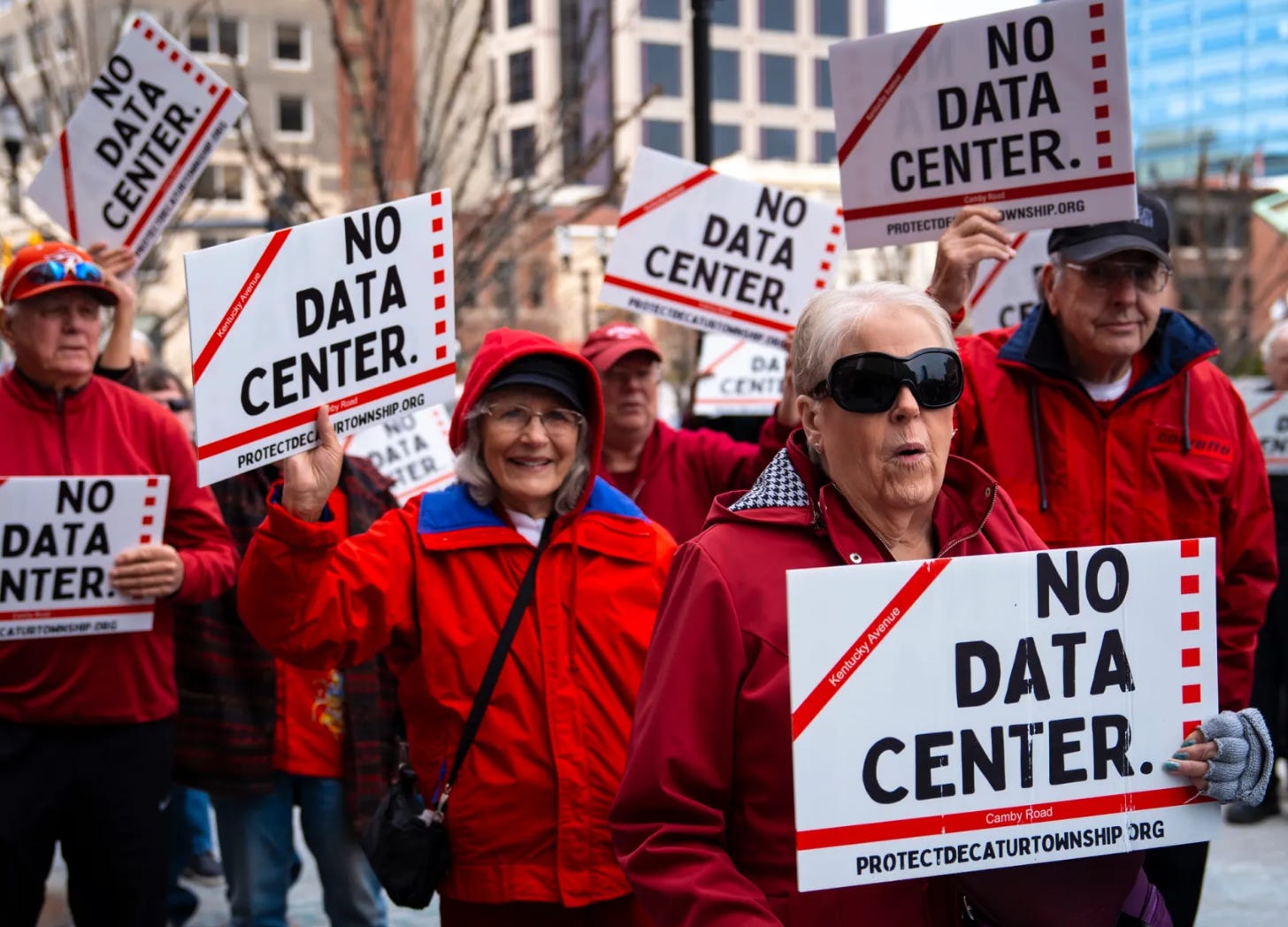
Organize. Show up. Make elected officials choose.
Why People Are Fighting
Electricity isn’t the only concern.
Data centers can consume millions of gallons of water for cooling. Research highlighted by the Association of American Universities estimated that training GPT-3 consumed roughly 700,000 liters of freshwater.
Then come the tax deals. Google recently secured an agreement in Michigan expected to cut its local taxes roughly in half, saving the company an estimated $125 million.
So residents are asking questions every community should ask:
How much power? How much water? How many permanent jobs? How much public money? And who decided?
Your Town Has Leverage
Data centers need local approvals. Zoning. Permits. Tax incentives. Utility agreements. Infrastructure.
Those decisions create pressure points.
Research on civil resistance by political scientist Erica Chenoweth shows why sustained participation matters: organized nonviolent campaigns have historically succeeded far more often than violent ones.
You don’t need hundreds of people to start.
You need people who keep showing up.
Take the Fight Home
Find your next city council, county commission or planning commission meeting.
Search the agenda for data center, rezoning, industrial development, and tax abatement.
Ask how much electricity and water the project requires. Ask who pays for infrastructure. Ask how many permanent jobs it creates. Ask what tax breaks the company wants.
Then bring three neighbors.
Festus did not wait for someone else to save their town.
Neither did Tucson.
Neither did Monterey Park.
They organized. They showed up. They won.
Now take the playbook home.
Click here to use DemCast’s data-center action toolkit. Drop it in your local group chat. Text or email it to neighbors and friends. Share it on social media. And make sure the people making these decisions know somebody is watching.

Pryor, Oklahoma is organizing.