


DemCast is a 501(c)4 non-profit organization dedicated to defeating right-wing extremist ideology and propaganda in digital spaces. The best way to support our work is to become a paying subscriber on Substack!
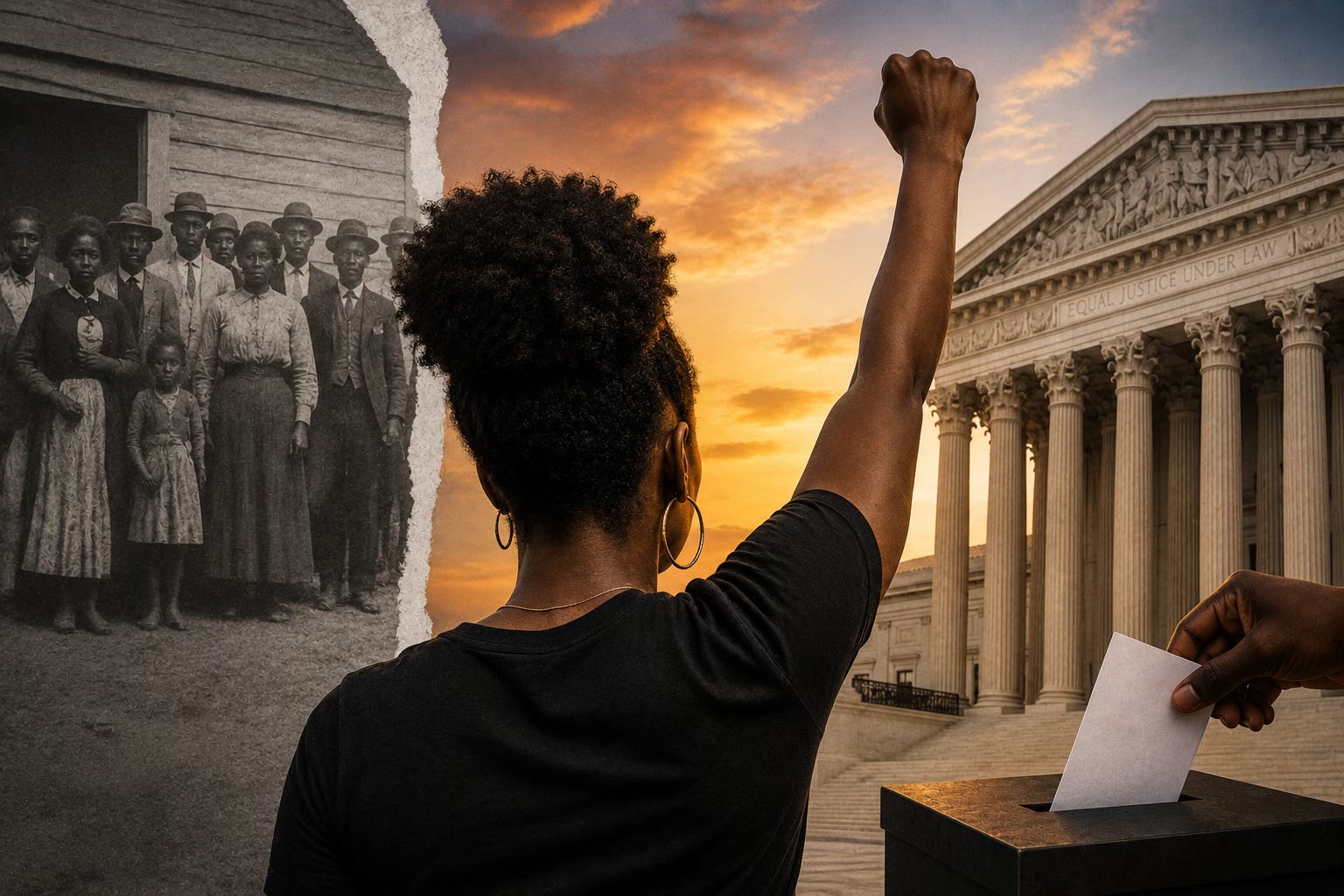
Today we celebrate Juneteenth - the day in 1865 when the last enslaved Americans in Galveston, Texas finally learned they were free, more than two years after President Abraham Lincoln signed the Emancipation Proclamation.
Juneteenth is often described as America’s “second Independence Day,” but that framing misses something important. Juneteenth is not simply a story about freedom won. It’s a story about freedom delayed; a reminder that rights guaranteed on paper mean very little if powerful people are allowed to ignore them. The enslavers of Texas knew slavery had been abolished. They simply chose not to tell the people whose lives were being stolen. Freedom arrived only when it was enforced.
That lesson feels especially relevant today.
Just weeks ago, the Supreme Court handed down its decision in Louisiana v. Callais, a ruling that effectively guts one of the most important remaining tools of the Voting Rights Act. For decades, Section 2 of the VRA allowed voters to challenge discriminatory election maps that diluted the political power of Black communities and other communities of color. The Court’s decision makes those challenges dramatically harder and opens the door for states to redraw districts in ways that weaken minority representation across the country.
Indeed, as soon as the SCOTUS decision came down, red states immediately began doing so.
Let’s be clear: The struggle for civil rights did not end with the Civil War. It did not end with Reconstruction. It did not end with the Civil Rights Movement. Every generation has faced new efforts to roll back the rights previous generations fought and bled to secure. Poll taxes became voter ID laws, literacy tests became voter roll purges, explicit racial exclusion became sophisticated gerrymandering. Tactics change, but the goal remains the same: limiting who gets a voice in our democracy.
That is why Juneteenth matters even more in 2026.
It is not merely a day to remember what happened in the past. It is a day to recognize that freedom, equality, and democracy are never self-executing. They require vigilance and participation by ordinary people willing to stand up when those rights come under attack.
At DemCast, we spend every day fighting the information war because democracy depends on an informed public. We know that disinformation, voter suppression, and attacks on civil rights are all connected. The same forces trying to rewrite our history are often the same forces trying to restrict our future.
So today, celebrate Juneteenth. Honor the generations who fought for freedom and voting rights. But also recognize that the work is not finished: the promise of America has always been bigger than the reality. Our job is to keep pushing until the two finally match.
Freedom delayed is freedom denied. And democracy, like freedom, only survives when people fight for it.
Juneteenth reminds all of us of how precious our rights are!
‘Freedom delayed is freedom denied. And democracy, like freedom, only survives when people fight for it.’ ✊🇺🇸 ❤️🤍 💙
This quote in the article hit my soul and heart with fear about what happening here in the USA under the current rule of 80yr old cognitively declining traitorous criminal Fuhrer Drumpf and the Trumplican Party - who promote and enact laws against women, LGBTQIA+, BIPOC, voting rights, environment, education - fill in the _____.