


The Digital Drumbeat by DemCast runs on defiance and determination. Subscribe free or paid and stand with the writers, organizers, and dreamers keeping democracy alive.
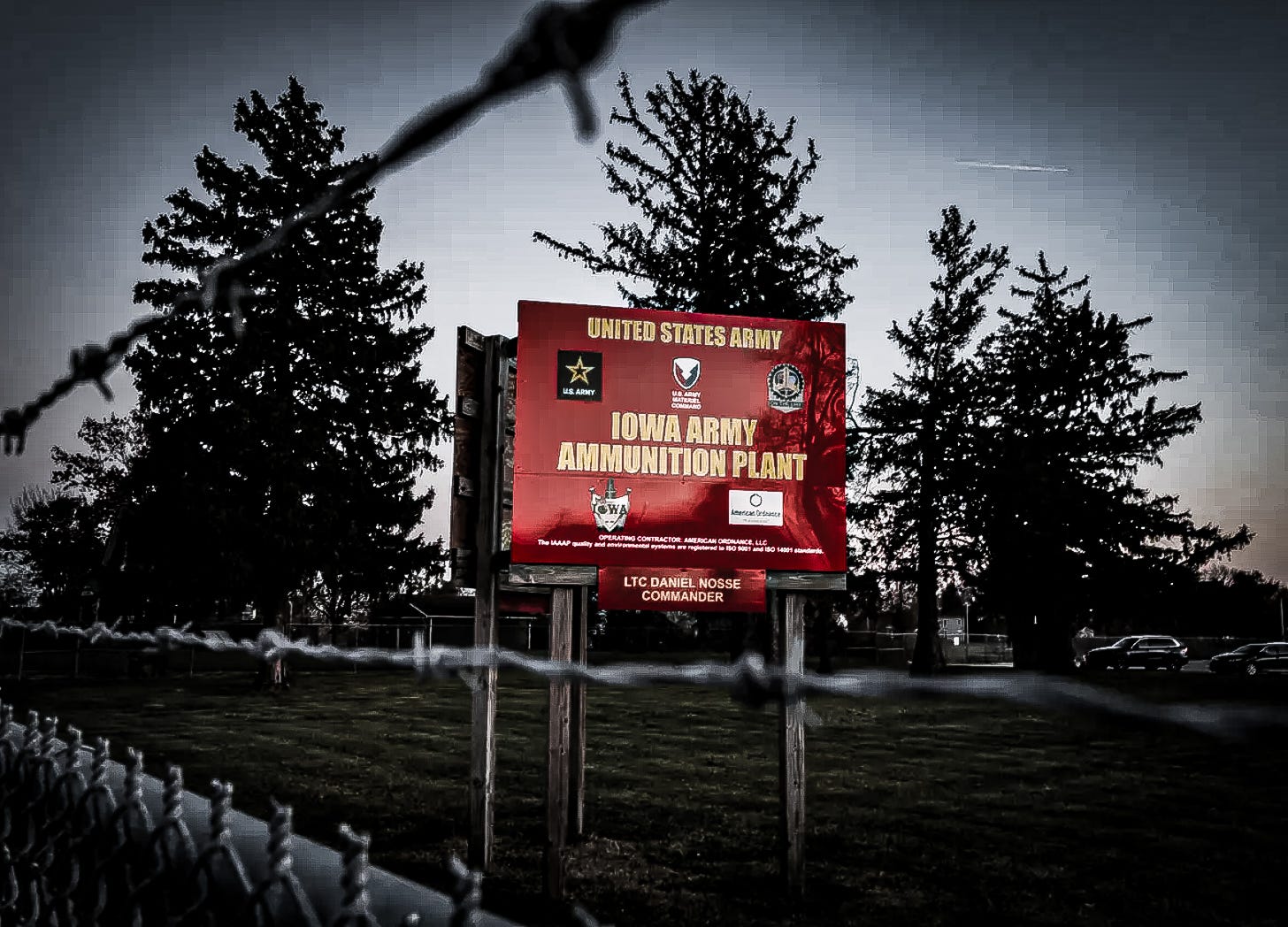
One woman in Middletown, Iowa, worries about lead collecting on her dog’s paws. Another resident learned about the Army’s planned detonation through television and social media. A third knew something was happening at the nearby ammunition plant in March, but nobody told him the nature of the danger.
Across southeast Iowa, residents are sealing windows and doors against potential lead contamination, according to the Associated Press.
Families should spend today preparing Thanksgiving dinner, welcoming relatives, and arguing over who makes the better pumpkin pie. Instead, they’re packing bags, protecting livestock, and wondering whether their children can safely play outside when they return home.
The Army discovered the danger on March 11.
Eight months ago.
Eight Months to Protect a Community
During a routine inspection at the Iowa Army Ammunition Plant, personnel discovered nearly five tons of deteriorating lead azide. The Army determined continued storage presented a growing risk of an uncontrolled explosion.
Army officials maintain they began communicating with stakeholders and residents in March. They held an October open house in Middletown. Yet Iowa’s own Department of Health and Human Services acknowledged in its November 23 fact sheet it had only recently learned of the detonation plan.
State emergency managers appealed to Governor Kim Reynolds for a coordinated response just days before the original detonation date.
The Environmental Protection Agency’s emergency permit took effect November 13, after the midterm elections.
The Army moved the detonation from Friday to Monday to Wednesday. Acting Army Secretary Adam Telle cited falling temperatures and growing safety concerns. After Trump intervened to delay the operation, the Army resumed its plans when the Eighth Circuit denied a stay.
The urgency of the detonation does not excuse eight months of inadequate public preparation.
How did federal officials spend eight months addressing a potentially catastrophic hazard while residents still struggled to get basic answers days before the detonation?
What Parents Deserve to Know
Lead dust can settle on playgrounds, toys, windowsills, vehicles, and soil. Children can inhale it or ingest it through contact with contaminated surfaces.
The American Academy of Pediatrics warns researchers have identified no safe blood lead level for children. An analysis involving 1,333 children across seven studies linked even low levels of lead exposure to reductions in IQ.
The Army continues to revise its estimates of where lead dust could travel and settle. Officials promise to conduct environmental sampling and publish the results.
Parents deserve more than estimates. They deserve independent testing, medical screening, and clear guidance about when their children can safely return to playgrounds, schoolyards, and backyards.
Who will pay for those protections?
A Hotel Room Won’t Protect a Farm
The Federal Emergency Management Agency (FEMA) will provide temporary lodging, transportation, food, and supplies to eligible residents. The Army says officials will notify evacuees when they can return home. FEMA currently offers lodging through Friday, November 27, with additional flexibility for those who need it.
Returning home brings another set of concerns.
The Army’s advisory directs residents in areas with potential lead deposition to clean outdoor play equipment, toys, patios, decks, windowsills, and other surfaces children frequently touch.
Farmers face additional challenges. The Army advises them to protect livestock feed and water from contamination.
You can’t do that for a pasture or a field.
Researchers studying lead contamination in leafy vegetables found substantial lead accumulation through direct contamination of leaves. Washing alone cannot eliminate all contamination.
In a separate study involving dairy cattle that consumed contaminated feed, one cow’s milk still exceeded the applicable lead safety limit 289 days later.
Neither study predicts the extent of contamination in Iowa. Both demonstrate the importance of agricultural testing and long-term monitoring.
What happens if farmers cannot sell their milk or crops? Who compensates them for lost income? Who pays for contaminated soil removal, veterinary care, or repeated environmental testing?
Farmers cannot budget for government assurances. They need financial guarantees.
Returning Home Doesn’t End the Government’s Responsibility
The Trump administration owes these communities a full accounting of its decisions since March 11.
Congress needs to establish when Army leadership understood the severity of the hazard, when officials approved the detonation plan, what information they shared with state and local authorities, and why residents still lacked critical information in November.
The federal government also owes affected communities independent environmental testing, accessible lead screening, long-term health monitoring, professional remediation where necessary, and compensation for documented losses.
Residents of Middletown didn’t create this mess, and they shouldn’t carry it alone.
No parent should have to choose between paying for lead testing and buying groceries. No farmer should absorb the financial consequences of federal decisions. No family should spend months wondering whether its home threatens its children’s health.
Demand Answers and Accountability
Contact Congress. Call the Capitol switchboard at 202-224-3121 and demand congressional oversight of the Army’s response, public access to environmental testing results, and federal funding for necessary cleanup, health monitoring, and compensation.
Help affected residents access assistance. The Army directs residents with questions about evacuation assistance to call FEMA at 1-800-621-3362 or visit DisasterAssistance.gov. Share the Army’s latest public safety advisory with anyone who lives near the affected area.
Support the organizations demanding environmental accountability. Earthjustice represents the Iowa Environmental Council and Sierra Club Iowa Chapter in their legal challenge against the Army. Follow their work and share their updates.
Tomorrow’s detonation aims to eliminate the immediate explosive hazard. It will not erase eight months of decisions or relieve the government of its obligations.
We cannot allow Washington to declare the operation a success while Iowa families and farmers shoulder the consequences.
Their health, their homes, and their livelihoods deserve more than an all-clear phone call.
The federal government owes them answers. It owes them protection. And it owes them every dollar necessary to make them whole.
It's not just residents of Iowa who will be affected. Iowa farms very literally feed the United States. Crops grown in Iowa include wheat, soybeans, rye, sweet corn, tomatoes, squash, peppers, cucumbers, leafy greens, and root/cole crops, apples, berries, melons, cherries, specialty/agroforestry crops such as chestnuts, pawpaws, and Asian pears, and hay fed to livestock around the country. Additionally, Iowa raises pigs (hogs), chickens (laying hens and broilers), cattle (beef and dairy), turkeys, sheep, and goats. How anyone in the regime thought exploding a well-documented neurotoxin all over the vast majority of our food supply was a good idea is beyond me.
This is crazy town…. When did we decide that lead contaminants are okay for the populace???? Looking at you RFK Jr…. No protections for people out of this admin…. Just like this datacenter they are building within 200 ft of my property line… Guess our health and lives are just trivial things now.