


The Digital Drumbeat by DemCast is fueled by defiance and determination. Subscribe, free or paid, and stand with the writers, organizers, and dreamers keeping democracy alive.
The Ad Campaign Taxpayers Paid For
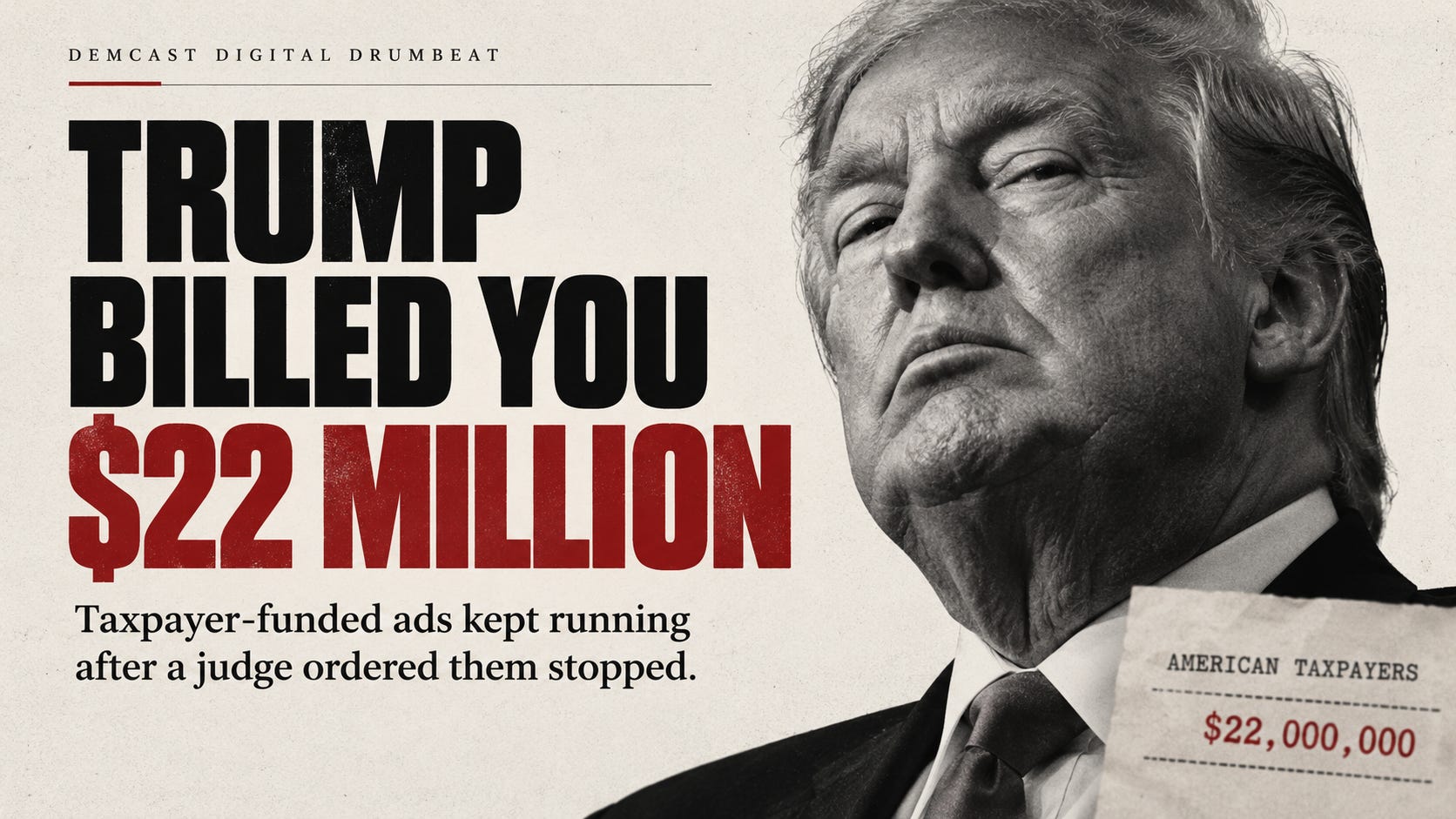
The administration spent nearly $22 million in public money on ads promoting Trump and his policies, according to NPR’s analysis of advertising data. About $10 million was spent after October 5, when Trump said a super PAC would take over the cost. The government-funded ads kept airing. On October 11, a federal judge ordered a halt.
That money came from taxpayers who never agreed to bankroll a promotional campaign for the president. The questions now are how public funds were approved for those ads and who will be held accountable for the spending.
Presidential Medals and Trump’s Stock Portfolio
Trump’s latest financial disclosures expose another conflict-of-interest concern. Reuters reported purchases of as much as $1.6 million in Nvidia stock as Trump prepared to honor its CEO, Jensen Huang, with a National Medal of Science. At the same time, the administration was weighing chip export rules that could affect Nvidia’s business.
And according to reporting on his financial disclosures, Trump purchased between $1 million and $5 million in SpaceX debt just two days before signing a new space transportation policy. SpaceX, led by Elon Musk, has an obvious interest in federal decisions about commercial launches.
None of these disclosures shows that a medal or policy decision was exchanged for an investment. The White House says outside managers handle Trump’s portfolio. But presidential recognition, government policy and the president’s investments should not be so difficult to disentangle.
Trump Wants His Golf Course to Become a Presidential Retreat
Trump has floated turning part of his West Palm Beach golf property into a Camp David-style retreat for future presidents. Reuters reported that his lawyer said Trump would finance the presidential residence and related facilities; yet the plan remains a proposal.
Imagine future presidents conducting official business on property owned by the sitting president’s family. Even if the government receives access without a facility-use charge, ownership and oversight raise questions that deserve public answers before any arrangement moves forward.
Billions for the Trump Family, Cuts to Public Benefits
The broader money story is even harder to ignore. A Reuters investigation estimated that the Trump family earned $2.3 billion from four crypto ventures between mid-2024 and April 2026. Those earnings are not themselves proof of an illegal exchange, but they underscore the extraordinary overlap between the presidency and private financial interests.
Meanwhile, the Congressional Budget Office’s latest projections show the 2025 reconciliation law reducing federal Medicaid outlays by an estimated $1.2 trillion and SNAP spending by $211 billion over 2026–2035. Different budget windows produce different totals, but the direction is unmistakable: deep reductions in programs households rely on while the first family’s business interests keep attracting scrutiny.
The Paper Trail is Getting Harder to Ignore
Sen. Maggie Hassan has also pressed Trump Mobile for answers about clear gaps in required FCC filings, scam prevention and customer data security. Those are allegations and compliance questions, not final agency findings. They still merit answers from a company profiting from the Trump name.
Voters understand the connection between corruption and their own bills. Navigator Research found that 81% say government corruption raises costs, including 75% of independents and 82% of non-MAGA Republicans.
The public understands that corruption costs money. Our job is to put credible reporting in front of people, show them who made the decisions and make sure they remember when they vote.
Share Three Posts Before Dinner
Open the DemCast toolkit. Share the taxpayer-funded ad story, the stock-trade disclosures and the golf course proposal. Add one sentence explaining what concerns you most, then send the reporting to a neighbor who thinks corruption has nothing to do with the price of groceries.
Put the receipts where people can see them. Make sure voters know exactly who paid the bill.