


The Digital Drumbeat by DemCast is fueled by defiance and determination. Subscribe, free or paid, and stand with the writers, organizers, and dreamers keeping democracy alive.
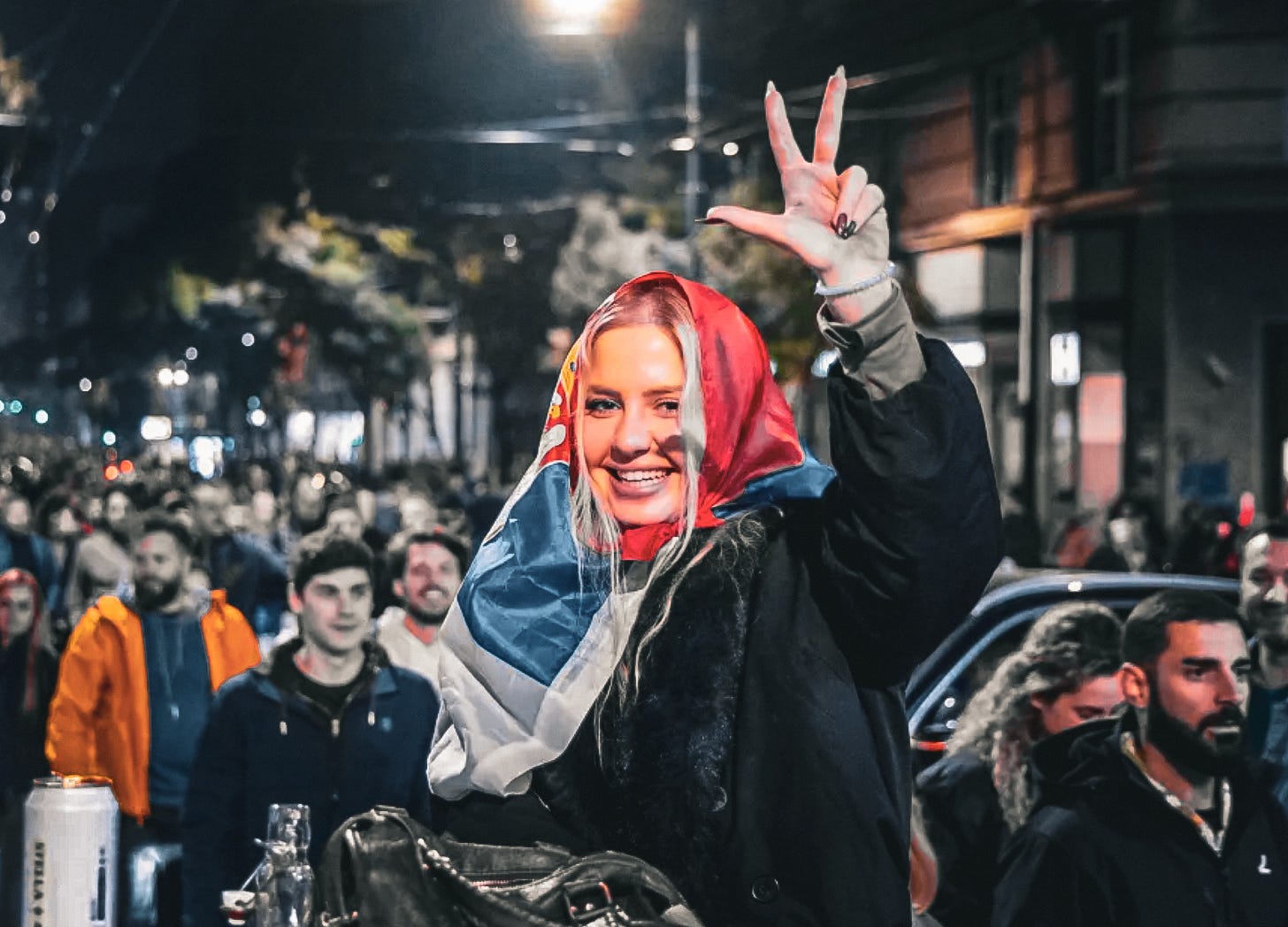
On Monday morning in Belgrade, hundreds of volunteers were out picking cigarette butts off the grass in the park across from the National Assembly. A pro-government camp had turned that park into a no-go zone for most citizens. One volunteer, Radomir Delic, described the cleanup to NPR as a chore that smelled like freedom. Vučić had conceded the night before, and the celebrating hadn’t stopped.
That same Sunday, Lula da Silva pulled off a comeback almost nobody predicted. He turns 81 today, and three weeks earlier pundits had written him off after a first-round loss. Americans vote in seven days, and these two stories matter to every one of us. They show what ordinary people can do when someone hands them a job instead of a reason to panic.
Sixteen Deaths and a Ballot Line
Serbia’s story starts with a slab of concrete. In November 2024, a canopy collapsed at a freshly renovated railway station in Novi Sad and killed 16 people. Students looked at the wreckage and saw what everyone else was afraid to say out loud: a government where nobody pays for corruption except the people who walk under its buildings. The disaster set off the protests that produced the Student List.
They kept protesting for almost two years, and then they did the unglamorous part. They built a slate of candidates, including academics, athletes, economists, and engineers, with no hierarchy and no single savior. They ran on a slogan anyone could repeat at a kitchen table: “Serbia or the mafia.” They also took the message out of the capital. Their “A Student in Every Village” drive reached more than 400 towns. A neighbor at the door can beat state television, it turns out, especially when she’s talking about safe bridges and honest contracts.
The result was a rout. Serbia’s election commission has the students at roughly 53 percent against about 39 percent for Vučić’s coalition, as reflected in the BBC’s reporting on the count. Turnout reached its highest level in more than 30 years. Projections gave the students about 138 seats in the 250-seat parliament. After 12 years running the country, Vučić conceded on election night.
Brazil Turned a Bad Night Into a Job Description
Three weeks earlier, Flávio Bolsonaro had beaten Lula in round one, 47.03 percent to 45.16, a gap of about 2.2 million votes. Lula’s reaction, as ABC Australia reported, was to declare, “Tomorrow we start a new campaign.” Young supporters poured into the streets chanting, “Bolsonaro, never again.”
Congressman André Janones then took over a WhatsApp channel called “Lula’s Army,” which already had 50,000 followers. Within three days it passed 2 million, and by election night it counted more than 10.8 million, as documented by ABC Australia and the BBC. Janones even coaxed Lula into buying his first cellphone and embracing the title “king of the selfie.” The posts made urgent, specific asks: share this, promote that hashtag, recruit a new voter. Lula’s campaign paired the digital push with concrete offers, including help for microentrepreneurs and plans to renegotiate consumer debt.
Lula finished with 51.79 percent against 48.21 percent for Bolsonaro, a margin of about 4.4 million votes, as confirmed by Brazil’s electoral court and Bloomberg’s election results tracker. CNN counted more than 10 million votes added between rounds. Abstention fell from 21.08 percent to about 19.2 percent, so more Brazilians showed up to vote.
What Two Victories Can’t Tell Us
Nobody can say how many votes a WhatsApp channel produced, and the honest reading is that street energy, digital coordination, persuasion, and an economic offer all fed each other. The winners also face real limits. Flávio Bolsonaro’s Liberal Party is the largest in both chambers of Congress, with 121 deputies and 28 senators, and Chatham House warns that Lula faces a difficult fight against conservative majorities. Bolsonaro eventually conceded after losing Trump’s backing but said he plans to sue Lula for “abusing the power of incumbency to influence the vote.” Serbia’s broad, leaderless coalition now has to turn a protest into a government.
Neither country mirrors ours, either. Serbia’s students fought a media system far more captured than anything American voters face. Brazil runs a two-round contest with compulsory voting for most adults. So we won’t copy-paste their tactics. We’ll steal the logic.
That logic shows up in the research too. A Cambridge study on pro-democracy messaging found that a positive frame improved perceptions of democratic support, while the negative version didn’t. The Carnegie Endowment warns that corruption messaging can feed cynicism and lower participation when it offers voters nothing to do. The students in Serbia named the rot in plain language and then showed up at the door. Brazil’s campaign called out the threat and promised help with debt and small businesses. Both gave people a reason to believe their vote could change something and then an assignment.
Click Here To Easily Share This Video!
Your Five-Minute Mission
Texts work, even this late. One field experiment on text-message voter mobilization found that reminders sent a full week before an election were as effective as ones sent the day before. Here’s how to use your next five minutes.
Check your own plan first. Go to Vote.gov to find your state’s official election office, then confirm your polling place, your early voting dates, and your ballot return rules. They vary widely by state.
Pick three people. Choose people who agree with us but may not have voted yet: the cousin who says it won’t matter, the coworker who’s been slammed, the neighbor who just moved.
Send this text, in your own words: “Hey, I’m making sure everyone I care about has a voting plan. What day and time are you going? Need a ride, a reminder, or the official link? I’ve got you.”
Follow up until all three have a plan. Skip the article forwards. Offer to drive, watch the kids, or stand in line with them.
Want a bigger role? Find a canvass, phone bank, or text bank on Mobilize.us, where you can search for events by ZIP code. You can also text RESIST to (866) 877-0037 to join DemCast’s Rapid Response Text Team. You’ll get one to four notifications a week about coordinated digital actions.
Click here to easily share across social media!
The Part Nobody Posts
When Vučić lost, the footage that traveled the world was fireworks and champagne. The detail that stays with me is what came next. Hundreds of people showed up the morning after, with trash bags, to take back a park. Those students didn’t win because they were louder or angrier than everyone else. They won because they kept knocking on doors until a lot of people they’d never met decided to come along.
You may not live in a swing district, and your three people may feel like a drop in the bucket. So send the text today. Then take your three people to vote, and bring snacks.